Wednesday, 6 April 2016

Module 5, Chapter 5: Quilting, Padding and Stuffing

Sample 1: Here I created a hand-stitched quilt mini sampler to try out a variety of hand embroidery stitches (in a linear way). My personal favourite is the chain stitch as it creates more of a texture.
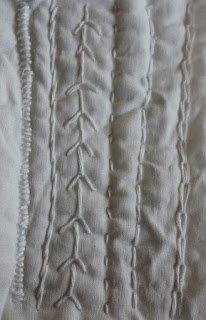
5/5/1
5/5/1
Sample 2: Another sampler of a variety of hand embroidery stitches, each focused inside the 'squares' formed by the weave pattern of the fabric. The bigger the stitch the greater the impact on this one.
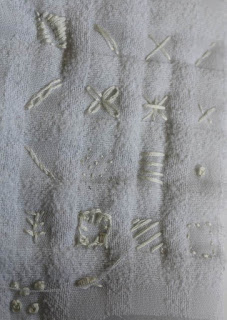
5/5/2
5/5/2
Sample 3: Instead of wadding I have tried some foam that came inside a parcel to provide protective padding. This foam is very deep- about 5cm thick but was soft and squidgy enough to work. I have used french knots to create an upholstered look to the sample. This idea could be developed further by using other components (e.g. buttons) to pull the foam in even more.
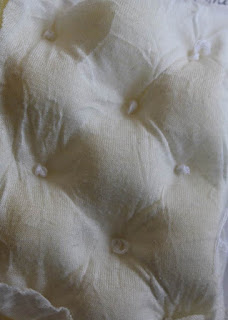
5/5/3
5/5/3
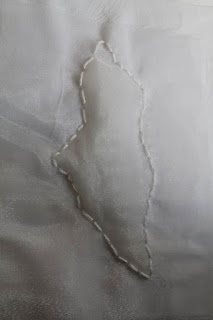
Sample 4: 'Trapunto' style quilting. I stitched a random shape and then stuffed it from behind. Although the shape had no thought behind it (I said it was random!) it is a little reminiscent of the leaves I photographed for chapter 1. It would be easy to variate this technique with different stitches and shapes.
5/5/4
5/5/4
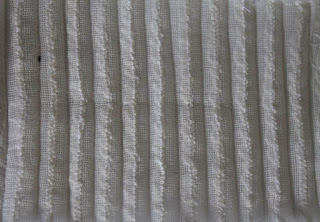
Sample 5: Simple parallel quilting using a sewing machine. Here I chose a fabric with a woven stripe effect and have exaggerated this texture by sewing between the raised stripe in the fabric.
5/5/5
5/5/5
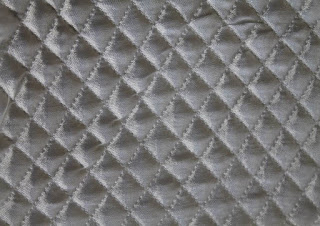
Sample 6: Here I have used a shiny satin fabric (a thin polyester lining material). A diamond shaped quilting pattern helps to enhance the light and shade effect created.There is an optical illusion here through the photo- it looks like an inverted 'waffle' effect but in real life the surface is raised/3D as if lots of mini cushions have been joined together.
5/5/6
5/5/6
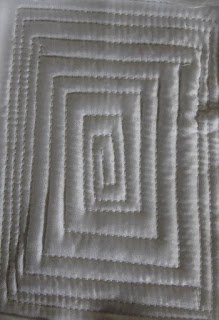
Sample 7: A 'square' spiral. Some experimentation in how close the lines are together. The closer the lines the less 'quilted' or 'bumpy' an effect is achieved- in other words a flatter result is created. That said, the stitching gives an interesting texture to the smooth and shiny fabric. Food for thought!
5/5/7
5/5/7
Sample 8: A chequered style pattern. The sheen on the fabric enhances the effect. I was not particularly careful with the spacing between my lines. there is further scope here to push the boundaries and use parallel lines without having to create a grid effect....
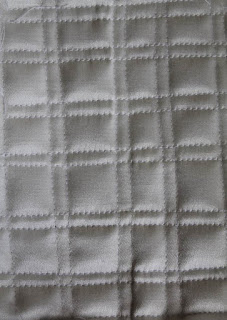
5/5/8
5/5/8
Sample 9: Use of a wavy style machine stitch in a crisscross pattern giving the illusion of tessellations. The dullness of the chiffon fabric used mutes the quilted effect.
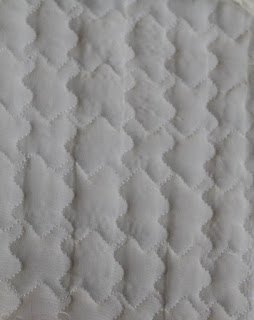
5/5/9
5/5/9
Sample 10: Random 'helix' style shapes have been created here using a sewing machine on a zigzag stitch.
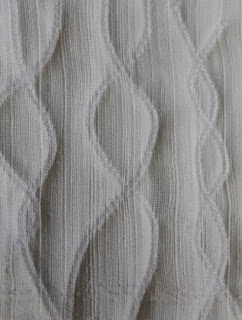
5/5/10
5/5/10
Sample 11: A mini linear quilted sample using a range of decorative machine stitches. The denser the stitch pattern the more texture is achieved on the surface. The wavy stitch patterns give a more 3D effect.
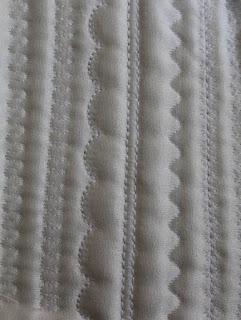
5/5/11
5/5/11
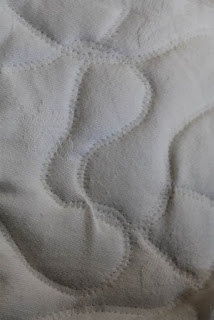
Sample 12: Use of a machine zigzag stitch with random wavy shapes created on the fabric surface. This pattern would suit larger scale panels. The pattern, combined with the brushed cotton fabric, make this sample feel very soft. I discovered while creating this one that you have to be very careful to avoid any unexpected tucks...
5/5/12
5/5/12
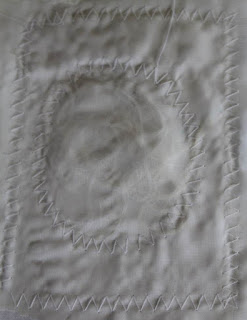
Sample 13: A sheer chiffon fabric with padded area of threads/fibres trapped on the inside. Unfortunately the photo doesn't do this sample justice, the centre in real life comes across as far more 3D and has a lot more interest with the shadows created by the overlapping fibres.
5/5/13
5/5/13
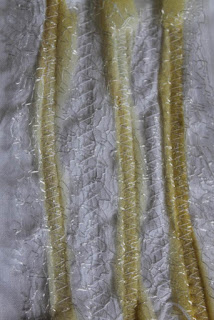
Sample 14: Strips of the packaging material foam (used in sample 3) that have been cut up and encapsulated with zigzag stitching and non woven 'net' style fabric. The matte surface of the foam contrasts really nicely with the shine of the net fabric. The stitching is directly on the foam. I was surprised at how much the stitching was able to flatten this foam.
5/5/14
5/5/14
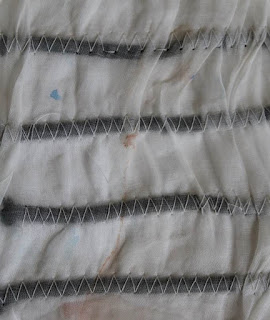
Sample 15: Old shoe lace used to create a cord quilt effect. I have used a piece of silk screen mesh on top. The mesh had a fierce kink in it making it difficult to keep in place when sewing.
5/5/15
5/5/15
Sample 16: The packaging foam again but this time it has been 'side' sliced thinly (so that it is only 1 cm thick) before being used. The natural wave pattern in the foam has been exposed as a result. It has been encapsulated under nylon netting. The cotton fabric backing has crumpled up during the process adding further texture to the sample. I quite like the fact that the foam has a slight sparkle to it under lights, not something that is showing up in any photos I take though.
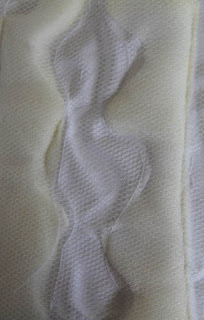
5/5/16
5/5/16


Module 5, Chapter 4: Fabric Investigation

To start this chapter I raided my fabric stash to extract samples of all the white/off white fabrics I had collected over the years. I collated small swatches of each one and recorded them into my sketchbook (see image below). I was quite surprised that I had such a wide variety. I tried to catalog each swatch as accurately as I could but I admit that some of them were complete guesses based on experience and comparing against fabrics I did have data on.

5/4/1: A collection of fabric swatches
A collection of fabric swatches
My next move was to take some of these fabrics and experiment with them- seeing how they ripped, melted/burned, frayed and knotted especially to see how I could create interesting edges/fabric bands as a result. I particularly enjoyed creating my own 'fringing' using a soldering iron to melt and cut the fabric simultaneously. the following image shows some of these experiments.

5/4/2: Fabric experiments
Fabric experiments

Module 5, Chapter 3, Texture and relief in Paper

For this chapter I was tasked to translate the patterns and textures captured in my photos into paper. This was easier said than done! My experience with paper manipulations in the previous chapter had told me that the thinner papers were more responsive, so I focused on using these to create my collages. The following image shows the results of these: not perfect copies of the photographic images, nor perfect photos of the paper collages but hopefully reminiscent of the overall 'look' or specific elements that the photos were conveying.

5/3/1: Translating photos into paper
Translating photos into paper

Module 5, Chapter 2: Paper relief investigations

For my investigations I gathered a wide variety of different papers to play with. I had standard tissue paper, paper towels, coated tissue paper, hand made papers, copier paper, thin papers, thicker papers...

I folded, pleated, crushed, scrumpled, layered, twisted, ripped, stitched and manipulated the papers I had collected. I found that the thinner the paper the easier it was to create a wider variety of textures and effects. The glue was important too- I used PVA but realised early on that it worked better if watered down a little. Some of my experiments are in the following image. My favourite papers were those such as the tissues that were semi-transparent when glue was added. This is because when up against the black background they had depth when layered.


Freshly inspired and motivated

I have had a whole year of 'false starts' with my work but thanks to inspiration and motivation from the Face book forum along with the opportunity to re-register with C&G I feel like I am now able to get back on track.

The last time I posted was in the summer. I have made some progress since then but until today have not blogged anything. My goal is to upload my work today so everything is up to date. Apologies in advance for the back to back posts clogging up feeds.

On a separate note, if anyone is interested, shameless plug here... I have a Twitter account where I regularly post Textiles related content. Follow me: @textileteacher I will follow back!

Tuesday, 28 July 2015

Module 5, Chapter 1: Texture in Landscape

Point to note as I start this module

For this Module I have set myself a steep challenge- I have decided to try and get it completed by the end of September the latest. Considering most modules so far have taken me the best part of a whole year to do, this on the surface sound impossible! I do however for the first time have the whole of the school summer holidays (school work aside) and I have a strong determination to try and make this work. The main reason for this is that I need to have completed the whole course by the end of Spring 2016 in order to achieve the City and Guilds qualification and there is still module 6 to consider which will need to be completed at the peak of my teaching demands on my time. Here goes....

Module 5: Texture in Landscape- gathering inspiration

To start this module I took my camera outside in and around my garden/local area and got very snap happy at the nature and landscape around me. Afterwards, while looking through literally the hundreds of pictures I took i found myself naturally drawn towards ones that focused on plants and the patterns made with their leaves, twigs and bark however there were other subjects that also looked interesting such as gravel and brick textures. 

Manipulating the images to enhance them

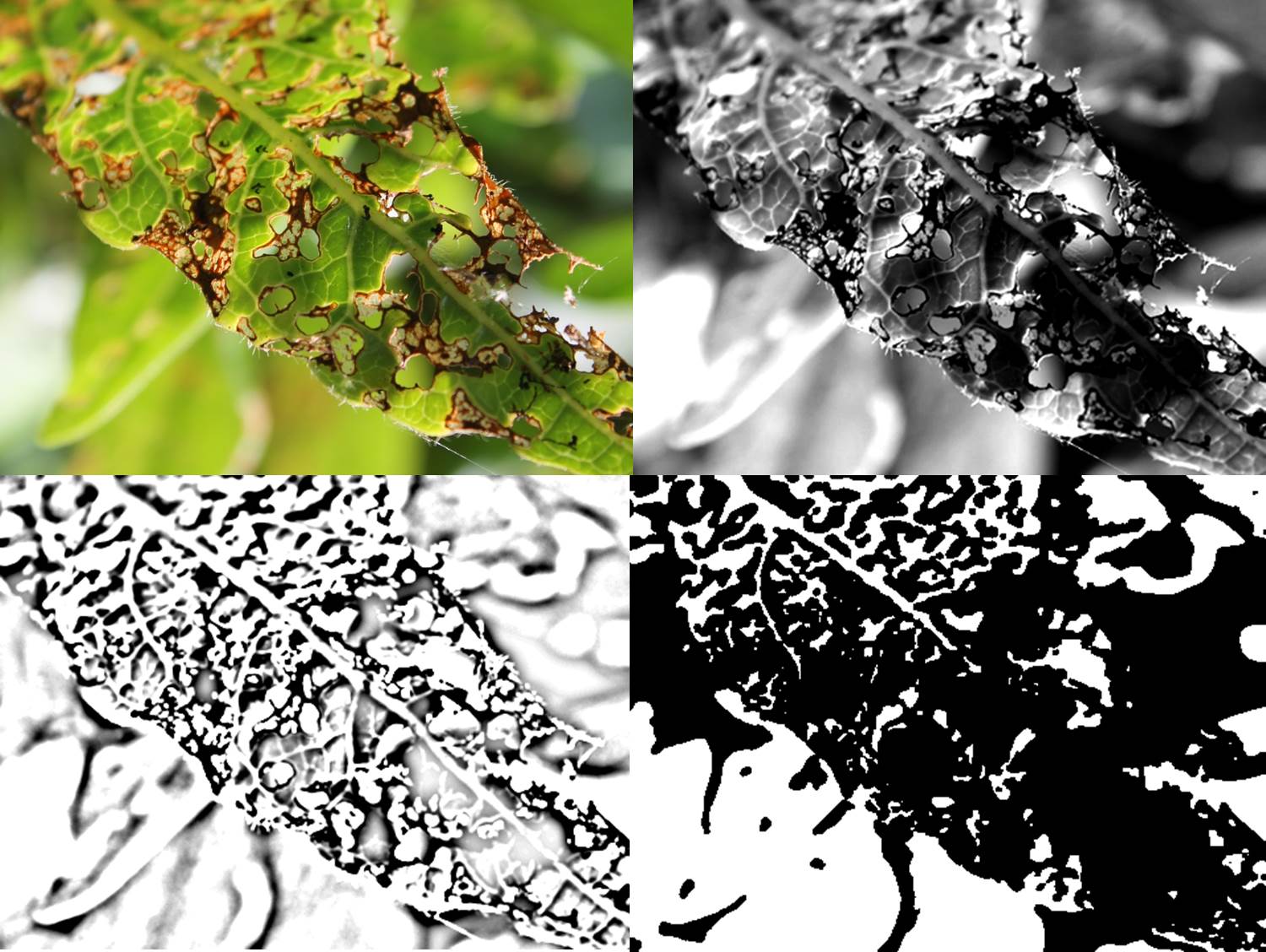
I chose about 25 images that I felt gave an interesting range of implied patterns and textures. Not all of these however displayed much contrast and I found the colour in the photographs to be distracting so I took each image and using Photoshop I turned the photographs into Grey-scale and played with the levels and contrast tools in order to bring out the patterns and textures even more. 

Also using Photoshop I tried various filters to see if I could enhance these patterns and contrasts further. I found the most successful filters to be in the 'sketch' menu- the first being 'Photocopy' and the second 'stamp'. Both these specific filters reduced the image further into black and white contrasts but did so in different ways. Finally I combined each version of each picture chosen as you can see in the following pictures and then selected 14 of these that I felt worked the most successfully overall. 

I intend to keep open minded to the images I will ultimately use- there is a lot of potential to really focus in more narrowly on the images here I have selected at this stage or even to regress back to my earlier photographs and filter experiments that I have chosen to reject at this early stage.

5/1/1
5/1/1
5/1/2
5/1/2
5/1/3
5/1/3
5/1/4
5/1/4
5/1/5
5/1/5
5/1/6
5/1/6
5/1/7
5/1/7
5/1/8
5/1/8
5/1/9
5/1/9
5/1/10
5/1/10
5/1/11
5/1/11
5/1/12
5/1/12
5/1/13
5/1/13
5/1/14
5/1/14

Monday, 8 June 2015

Module 4: Authentication document


The above image shows my completed authentication form for module 4. Cannot wait to get started on module 5!